1971 Maserati Indy America Spec
| Make: | Maserati |
| Model: | Coupe |
| Type: | Coupe |
| Trim: | America Spec |
| Doors: | 2 |
| Year: | 1971 |
| Mileage: | 50550 |
| VIN: | AM 1161248 |
| Color: | Green |
| Engine: | 4.7 L V8 |
| Cylinders: | 8 |
| Fuel: | Gasoline |
| Transmission: | Manual |
| Interior color: | Blue |
| Drive side: | Left-Hand Drive |
| Vehicle Title: | Clean |
| Item location: | Crownsville, Maryland, United States |
1971 Maserati Coupe America Spec Additional Info:
.
Chassis #: AM1161248
TheMaserati Indy(Tipo AM116) is a four-seaterfastbackgrand tourerproduced by theItaliancar manufacturerMaserati from 1969 to 1975. It was the first car produced by Maserati underCitroënownership.
The Indy was conceived as an alternative to theGhiblioffering a V8 engine and room for four people; it effectively replaced both the ageing six-cylinder2+2Maserati Sebring—which descended from the 19573500 GT— and thefirst generation Quattroporte.
The car was christened “Indy” in honor of Maserati's two victories at theIndy 500 in 1939 and 1940. (Maserati are still the only Italian Marque, along with Dallara, to have won this famous race!)
At its launch in 1969 the Indy was offered with a 4.2-litre V8 engine. From 1970 a 4.7-litre Indy 4700 was offered alongside the 4200; the same year some interior updates were introduced, including seats with retractable headrests and a newdashboard. In 1972, Maserati added the Indy 4900 to the range, equipped with the new 4.9-litre V8.
Production of the Indy ended in 1975. In total 1,104 were produced, 440 of them were Indy 4200s, 364 were Indy 4700s and 300 were Indy 4900s.
At the 1970 Turin Motor Show there appeared an upgraded model alongside the existing 4.2-litre car. This new version was powered by a 4.7-litre V8, with Bosch electronic ignition, now developing 290 bhp with a top speed of 165 mph (265 kph). Externally the new version could be distinguished by its deeper full length chrome door sill and re-positioned front indicators. Internally the re-designed front seats now had retractable headrests.
The Indy usedunibodyconstruction. The suspension layout was shared with the Ghibli. At the front there weredouble wishbone, with coaxial hydraulicdampersandroll bar, and ananti-roll bar. At the rear there was alive axle withsemi-elliptical springs, a single longitudinaltorc arm, hydraulic dampers and an anti-roll bar. Brakes were vented and servo-assisteddiscson all four wheels. The engines were Maserati's own all aluminum, fouroverhead cam Tipo 107V8family, and were fed by fourWeber42 DCNF twin-chokecarburetors; they had awet sump, and were thus related but different from the higher output,dry sumpTipo 115units of the flagship Ghibli.
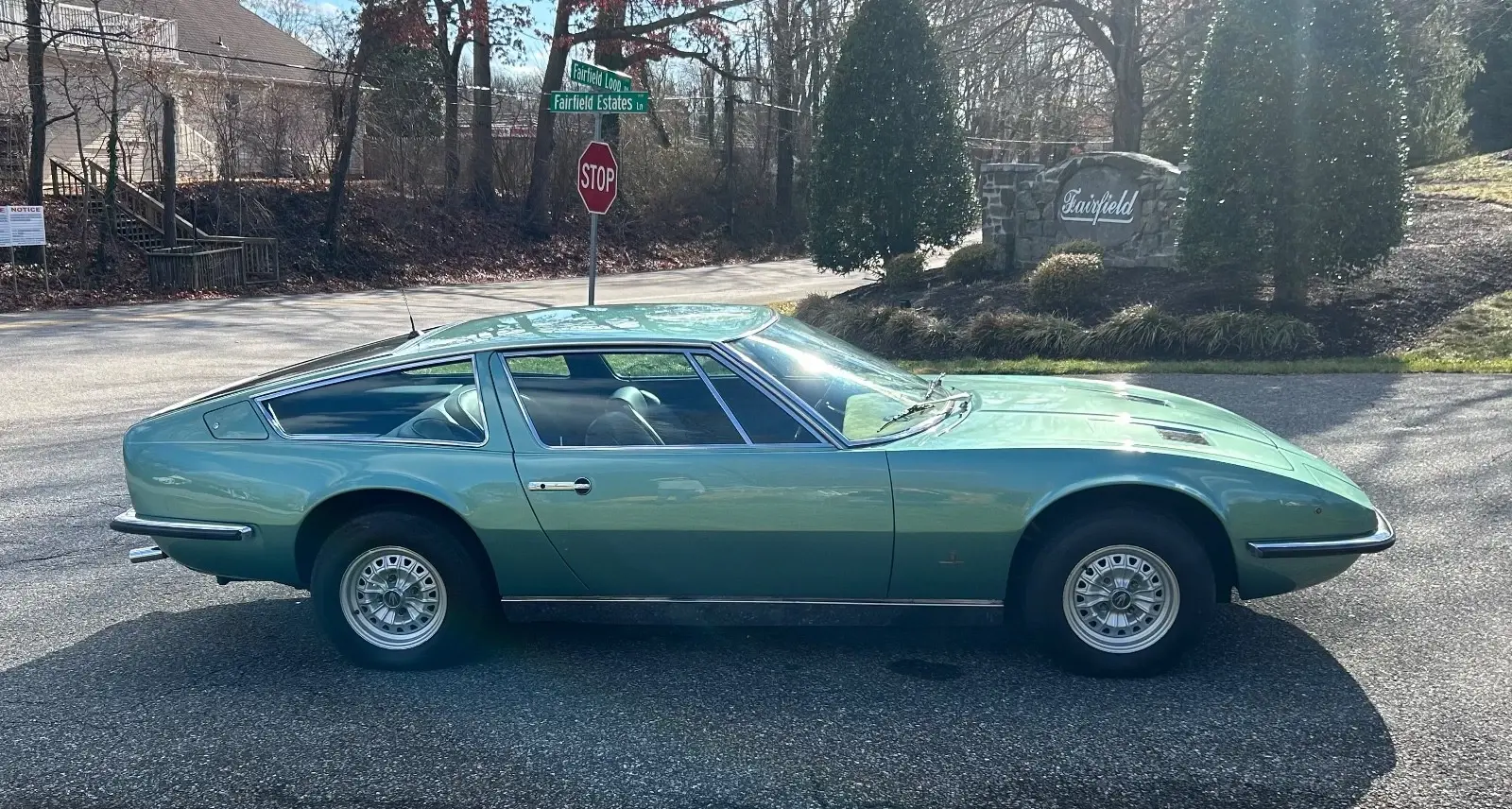
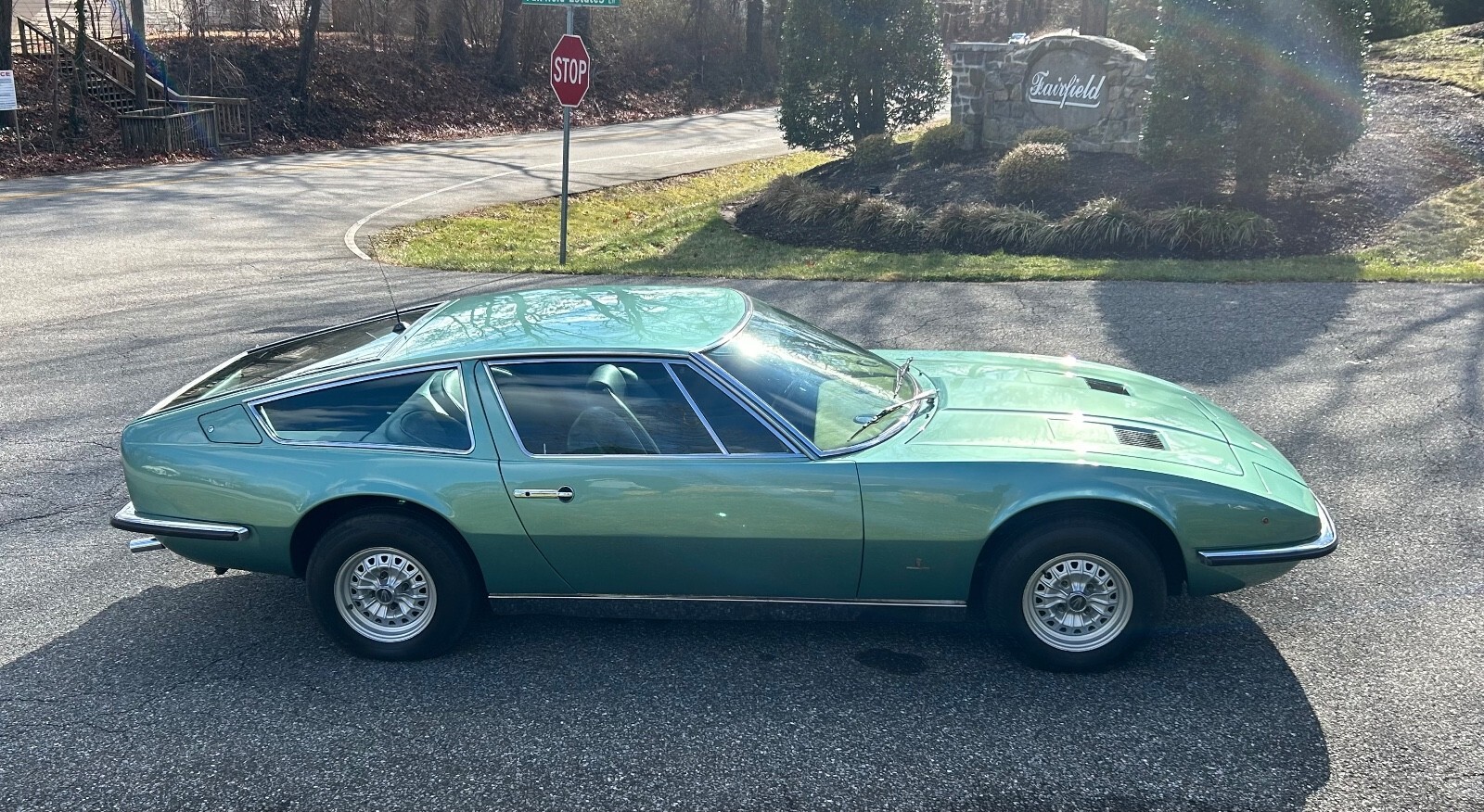
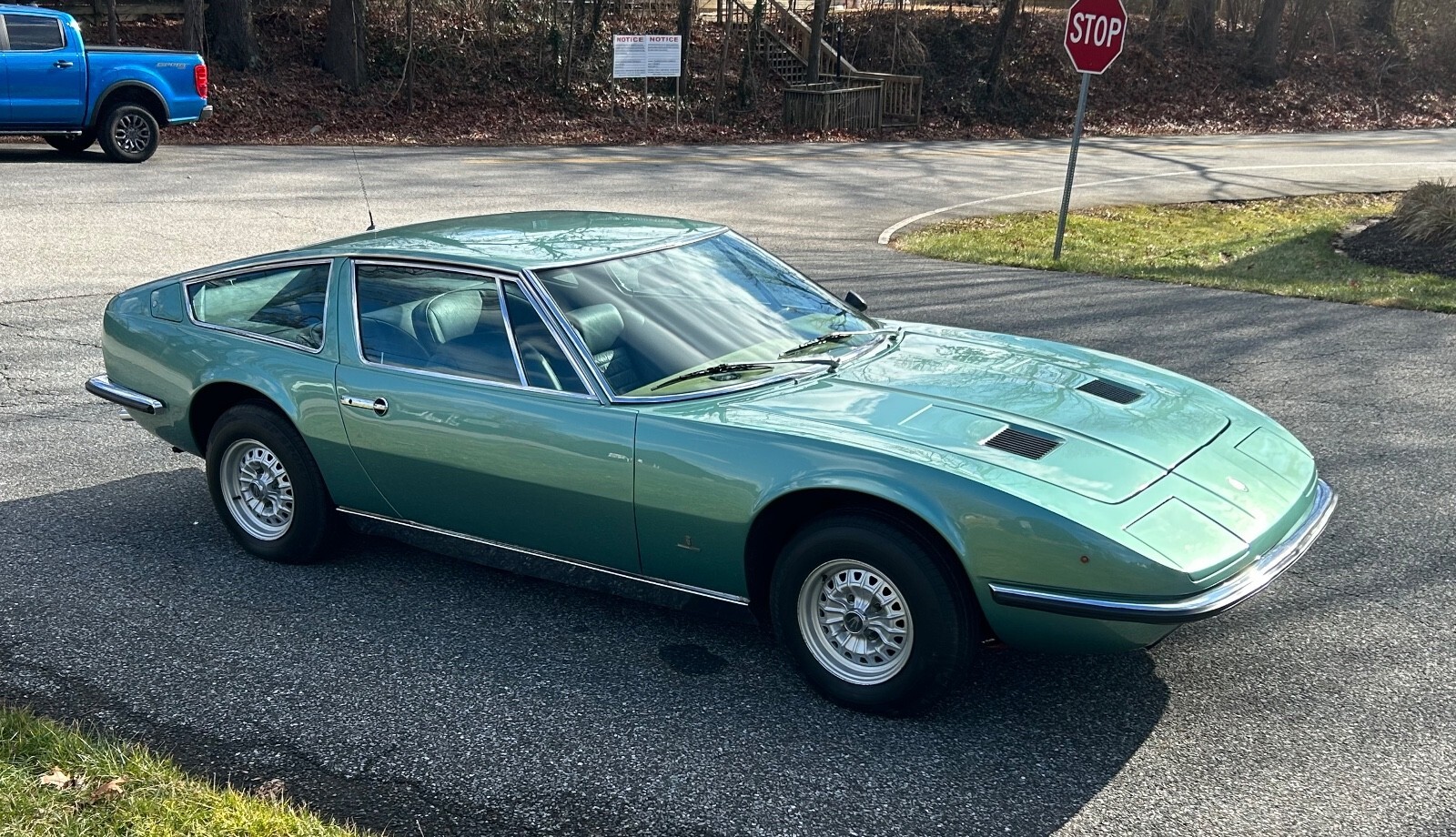
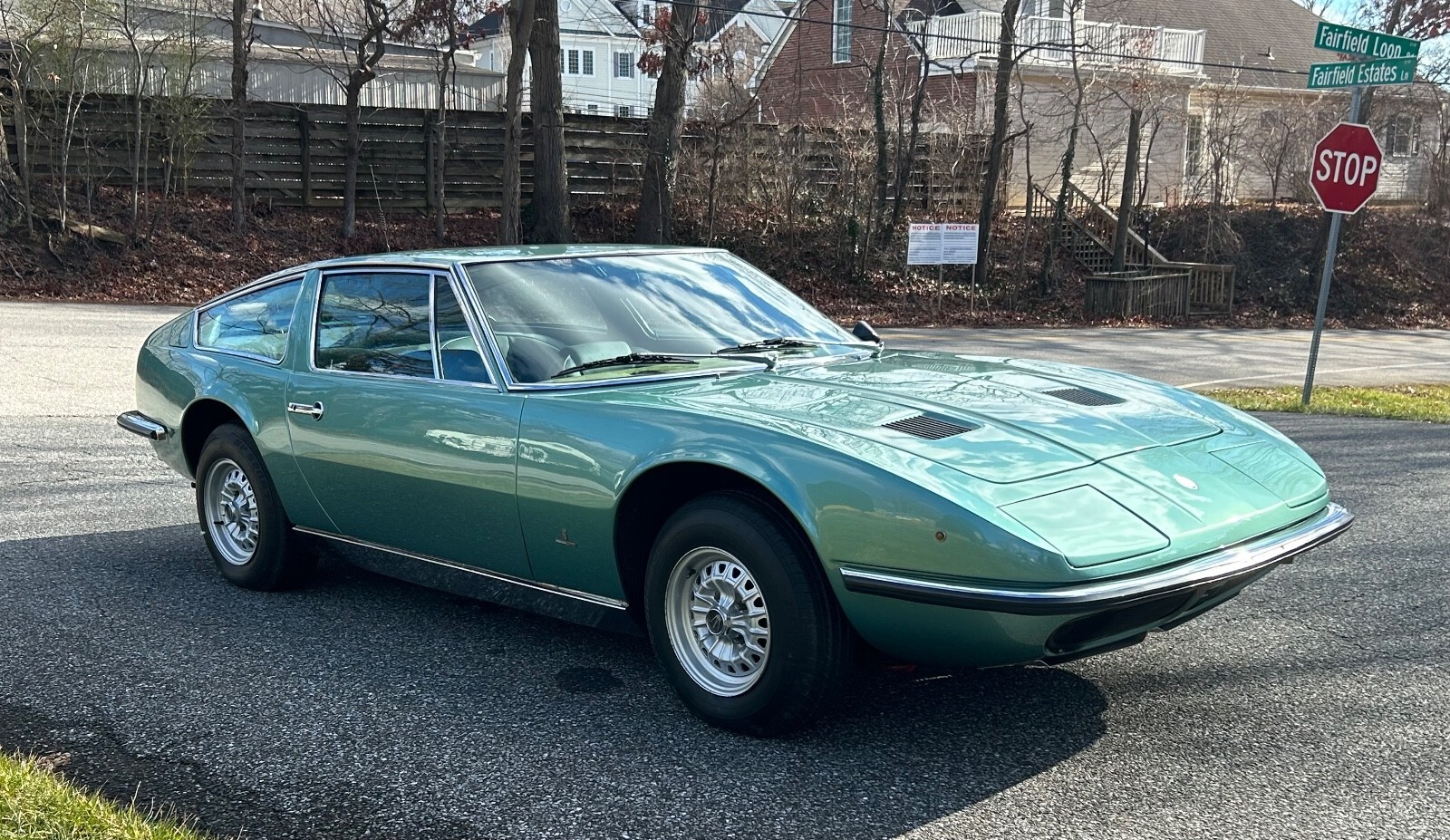
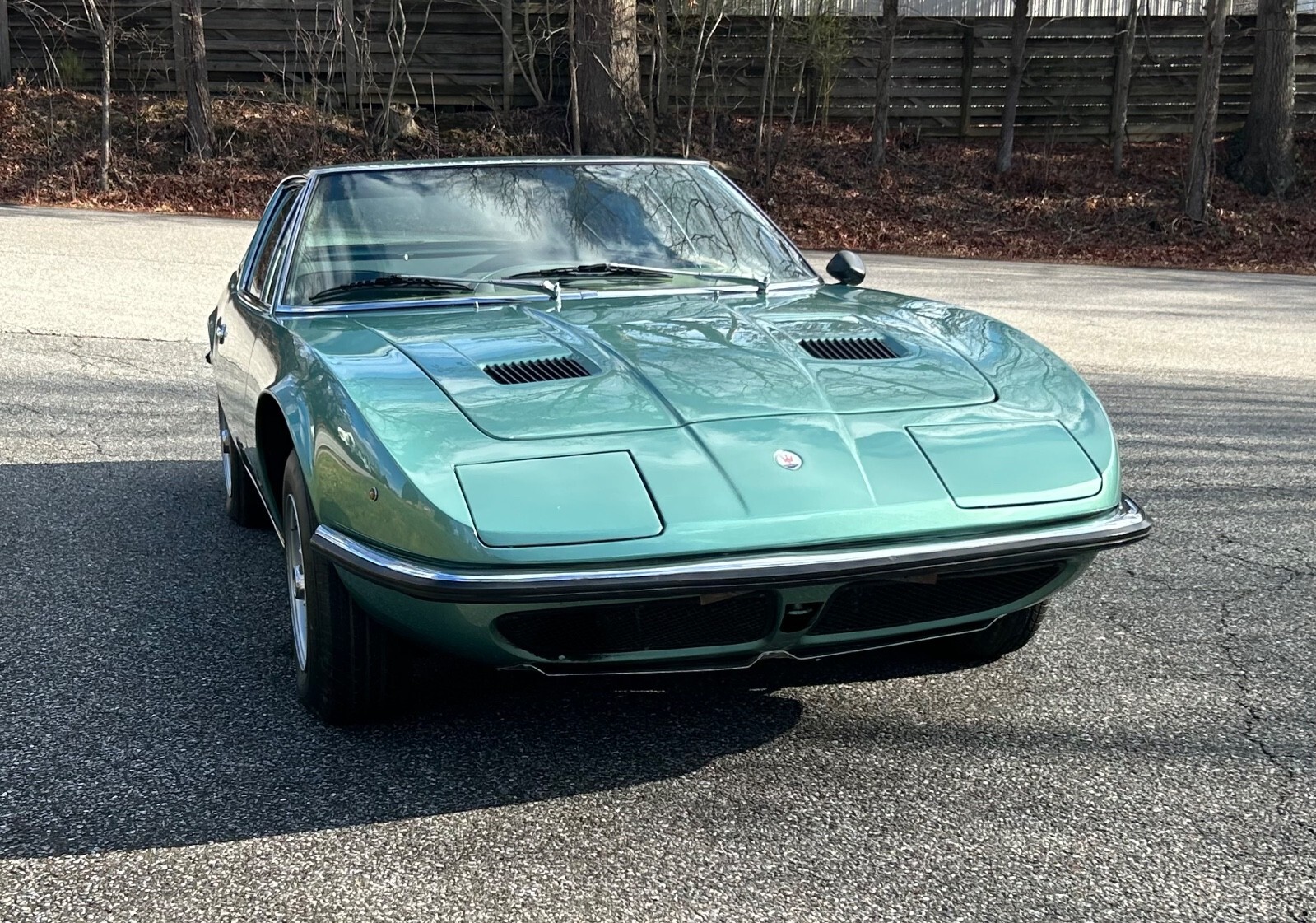
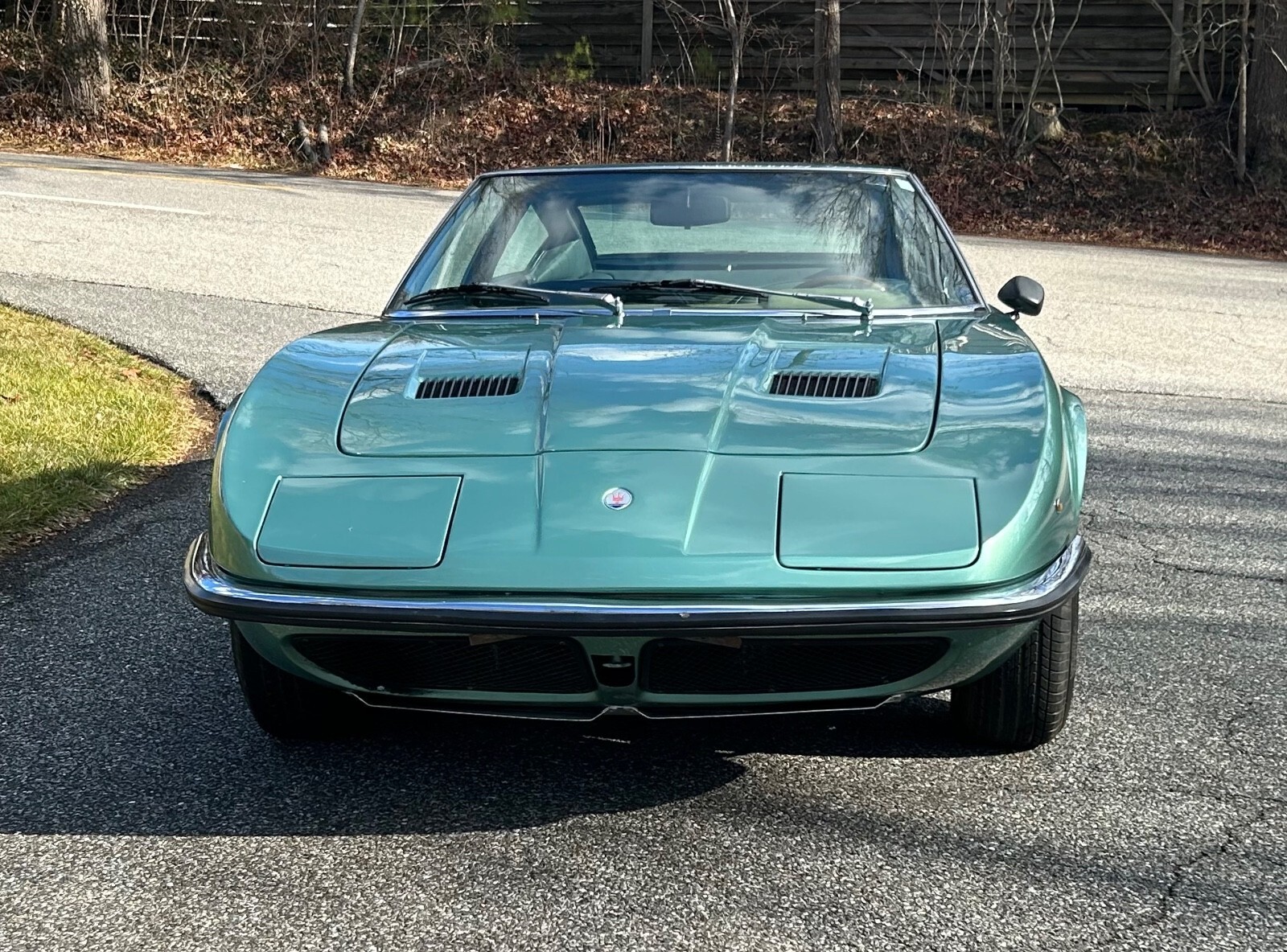
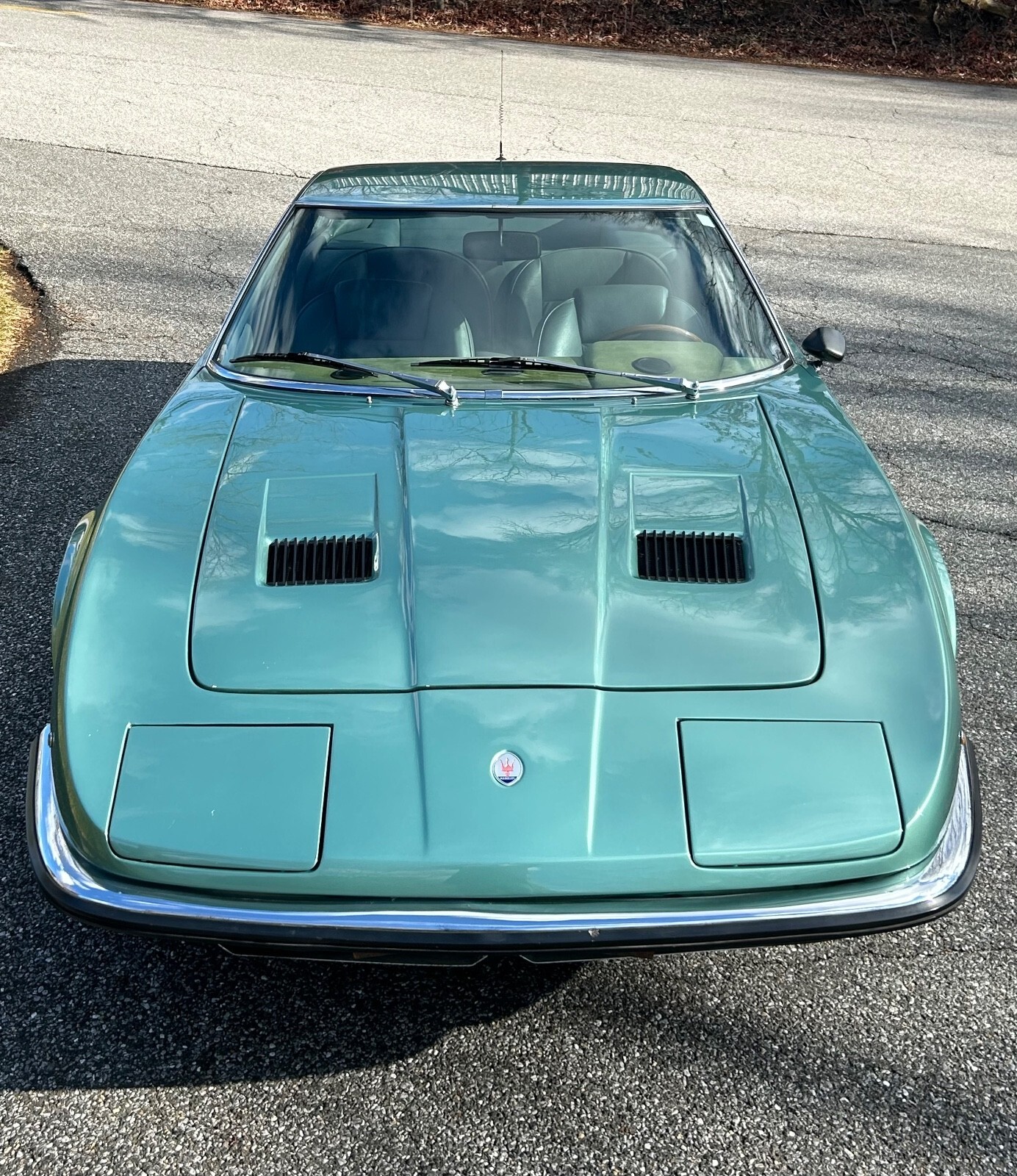
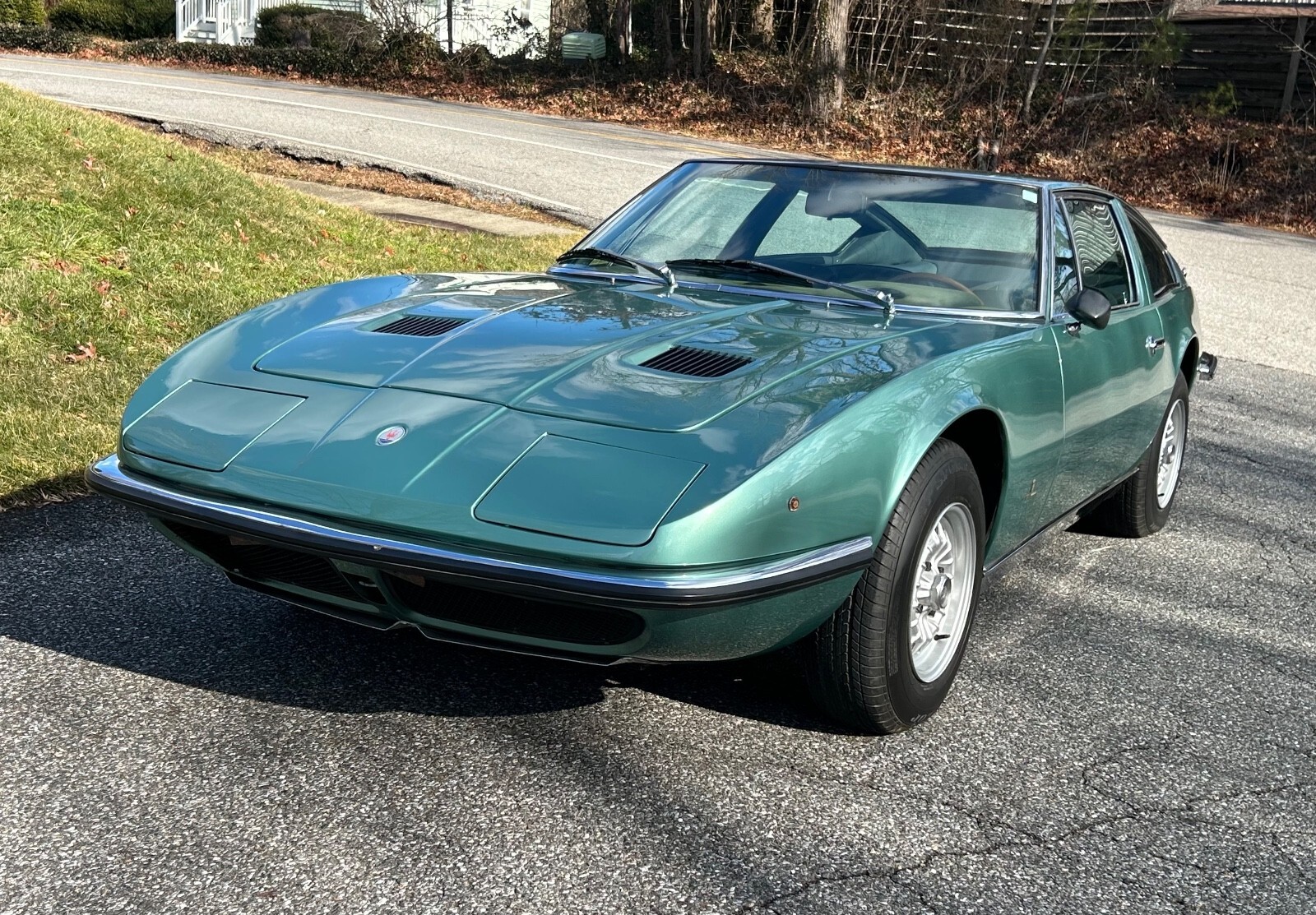
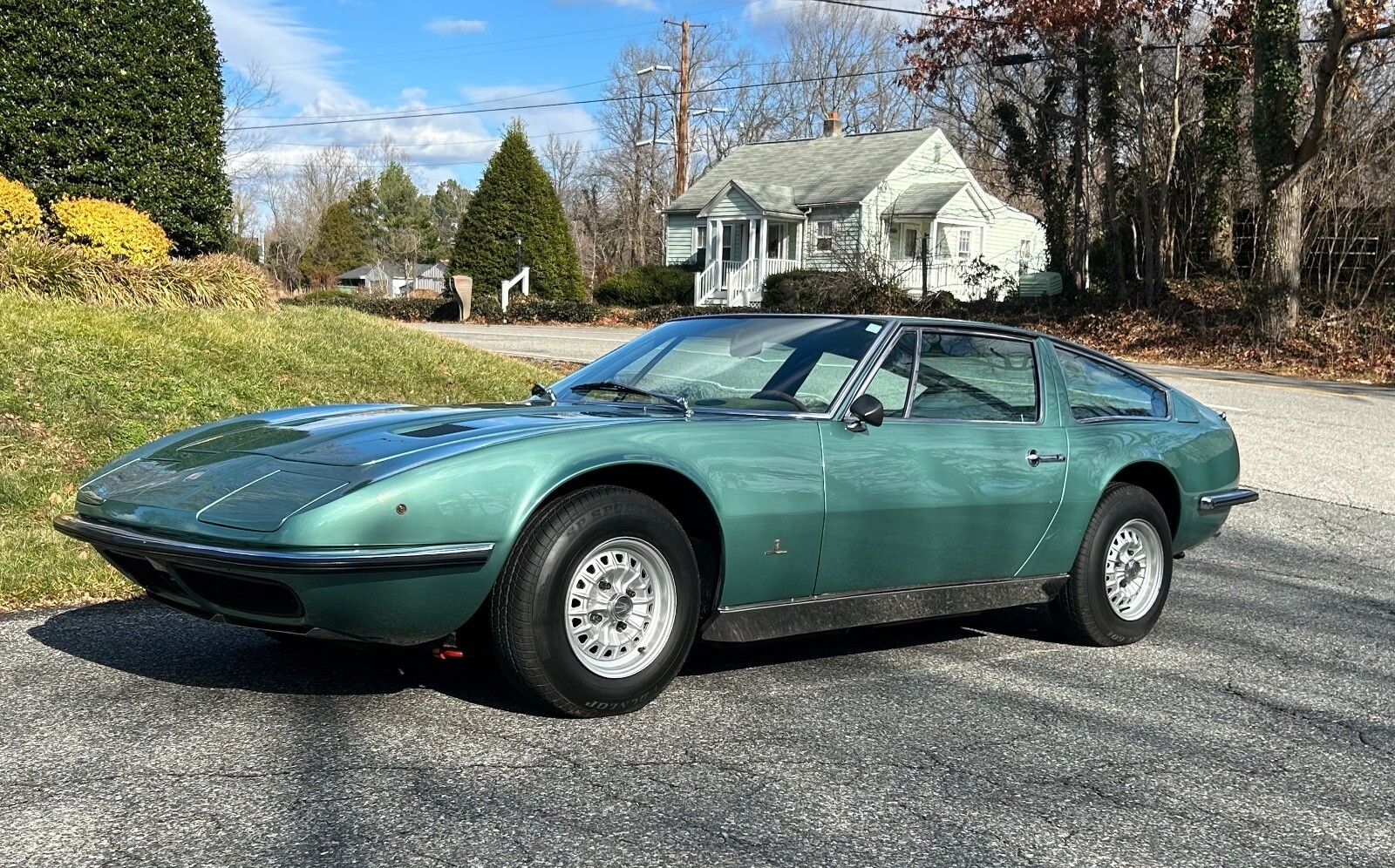
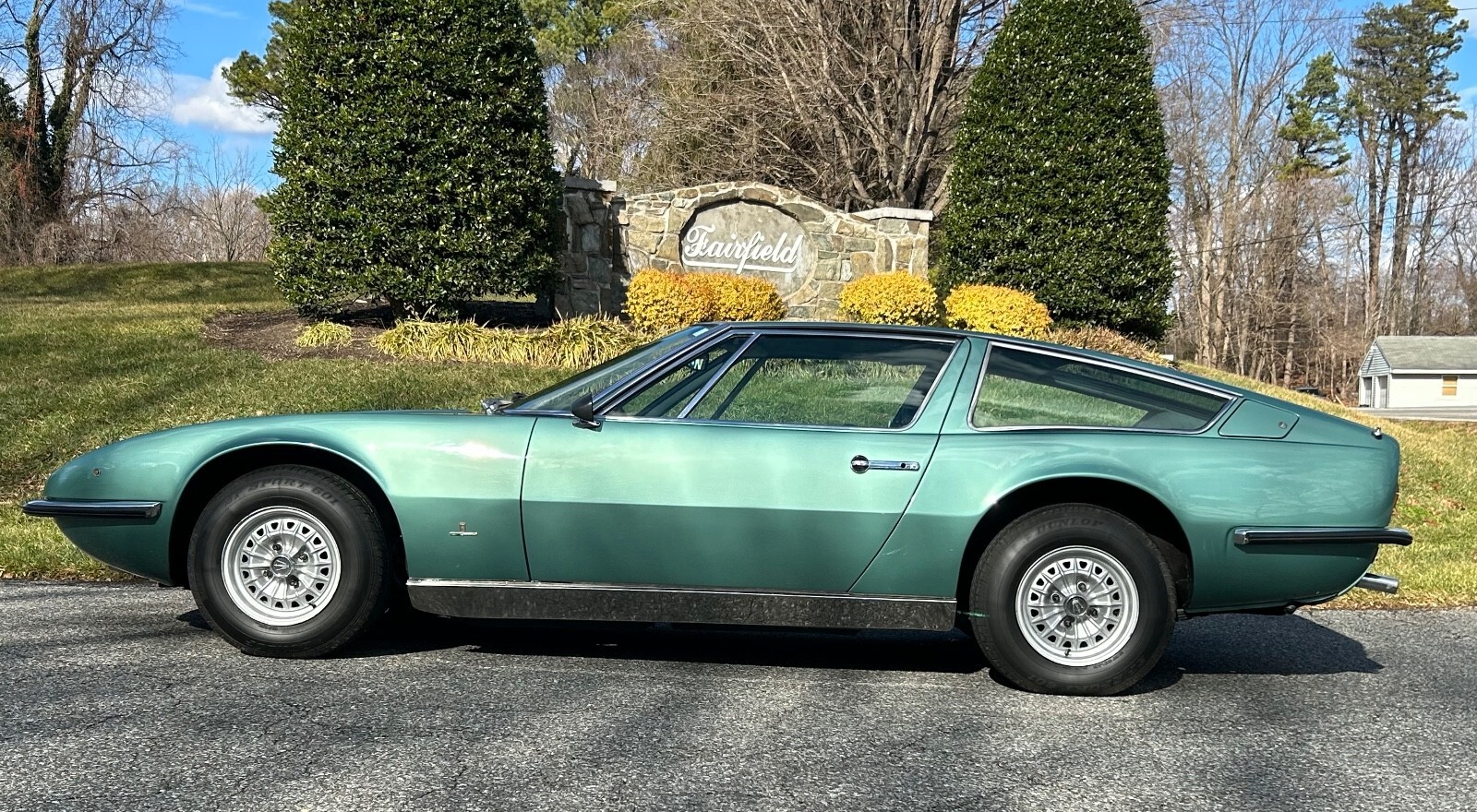
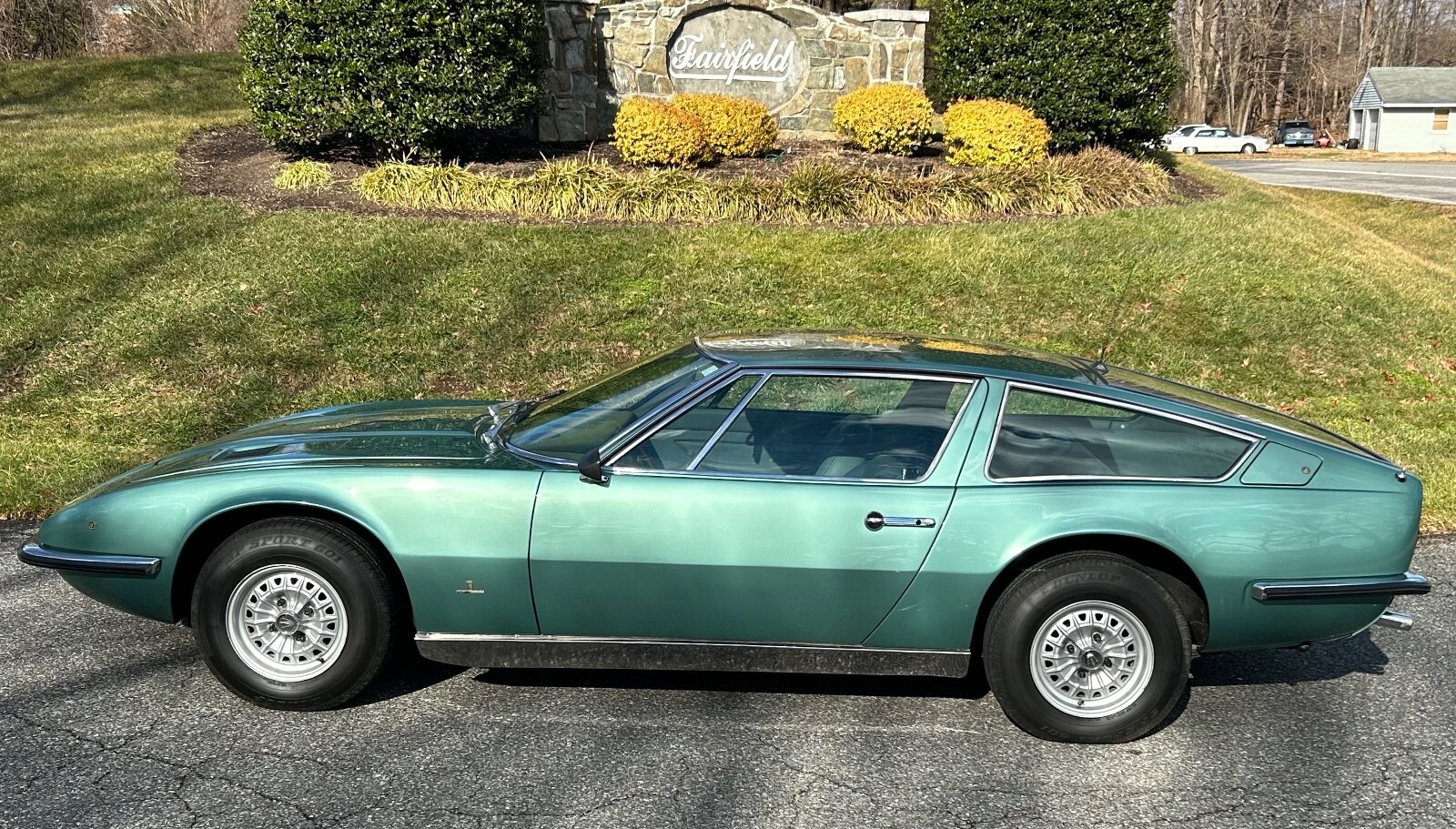
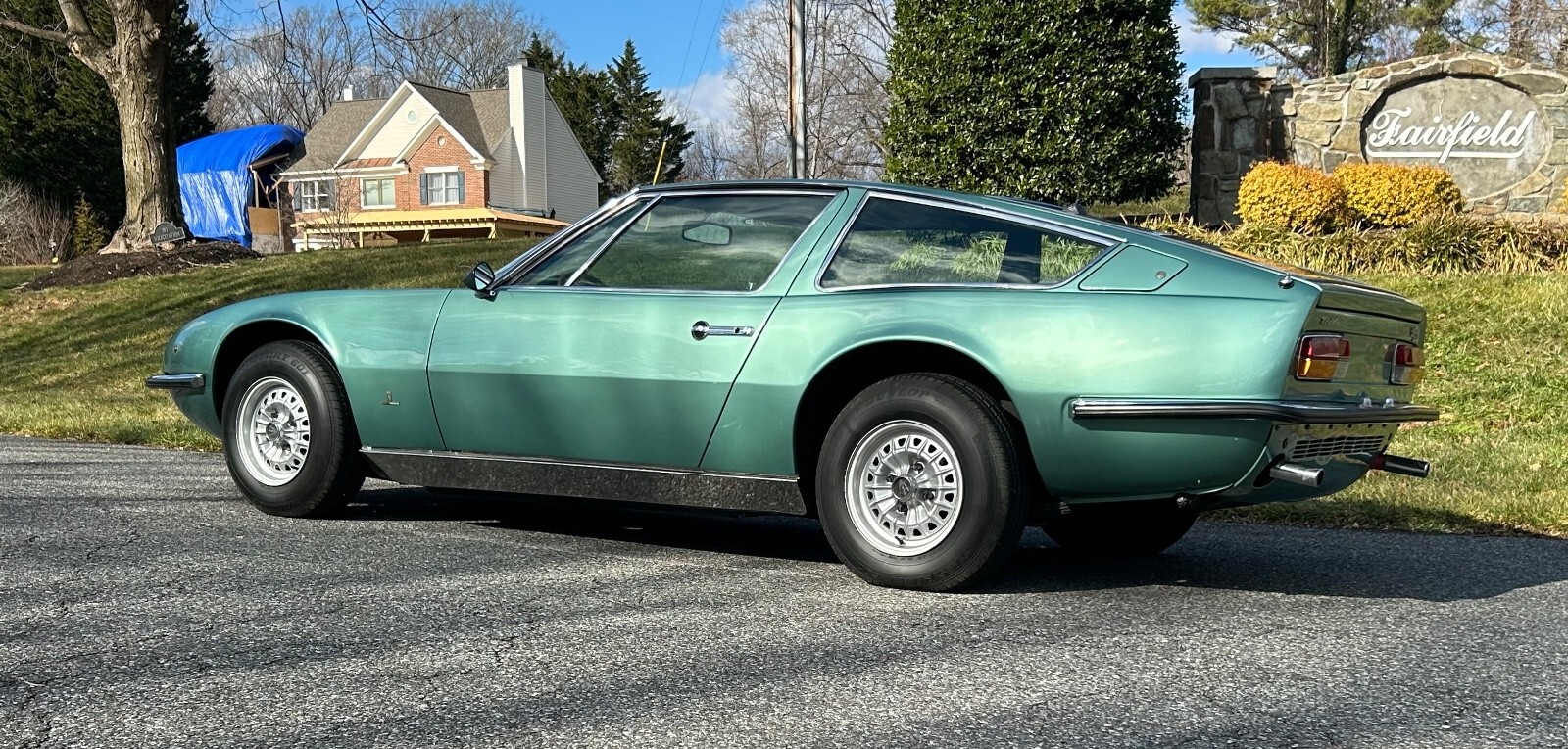
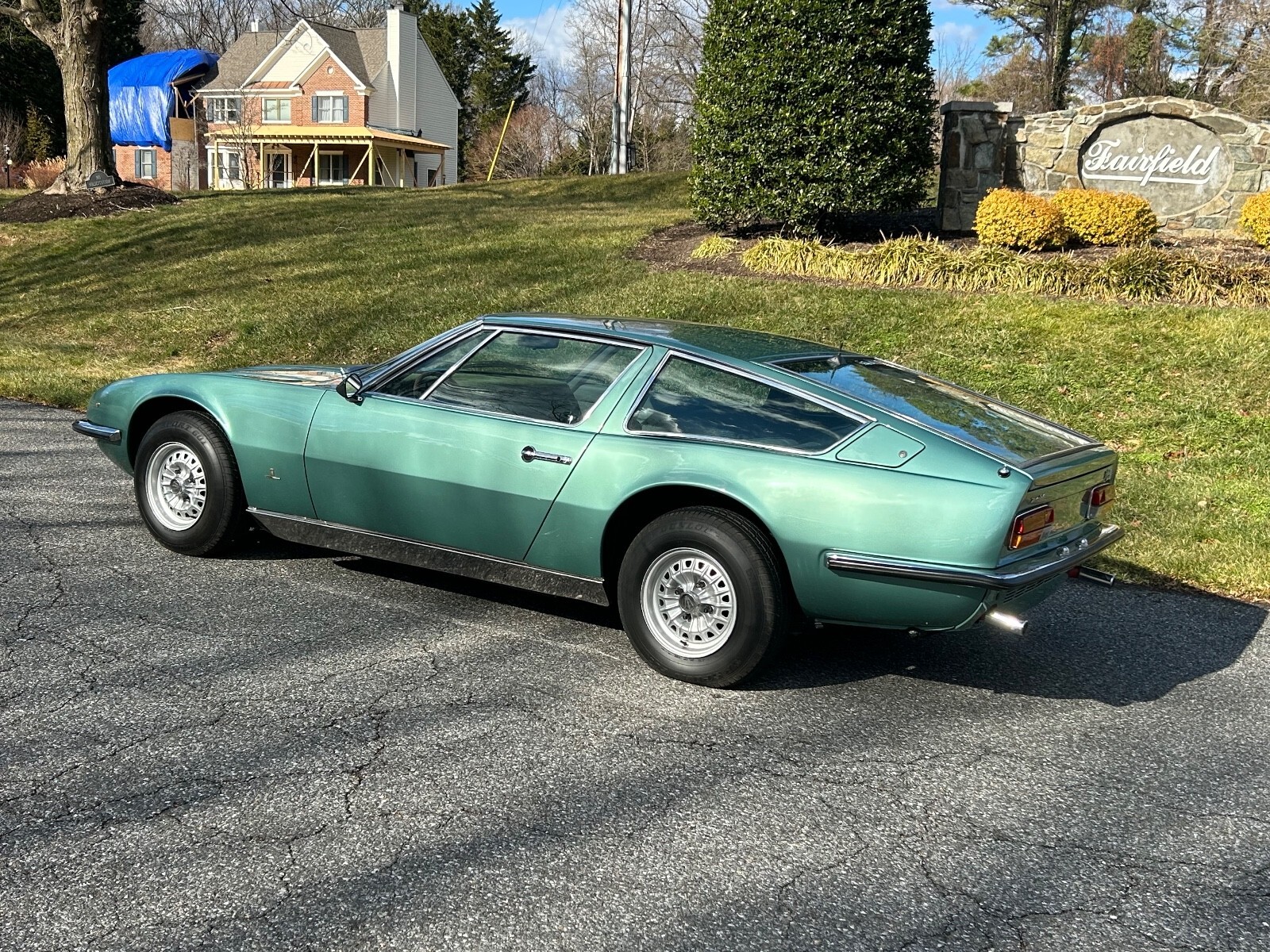
Without a doubt it was the side profile of the Indy that best demonstrated Vignale's clever design. The front elevation with its full width slim wrap around front rubber-insert bumper and the use of retractable headlights, although attractive, lacked the long low line of the Ghibli, largely due to the Indy's wet sump engine. A full width windowed hatch flowed down to a cut-off tail incorporating the now standard horizontal rear light clusters above a full width rear bumper. Under the bumper was a panel with a central grille and openings either side from which exited the exhaust pipes.
The dashboard was true Gran Turismo: a three-spoked adjustable (up and down) Nardi steering wheel, behind which was a compact binnacle housing a large speedometer and rev counter. Situated in between these were an oil pressure gauge, an oil temperature gauge, a water temperature gauge, a fuel gauge, an analogue clock and an amp meter. On the passenger side was a similar binnacle housing an analogue clock under which was an ample glove box.
Vingale's design concealed an ample interior where even the rear passengers were afforded plenty of room. The luggage area, accessed via the almost horizontal hatch, was excellent with around 18 cubic feet of space. This area was flanked by two 50 liter petrol tanks, the battery, spare wheel, car jack and an adequate tool kit being housed under the boot floor.
This specific car has spent the last 15 years in a private collection in Kuwait. The car is in very good condition both cosmetically and mechanically. Runs, drives, and stops like a charm! I recently purchased the car and completed the import process back to the USA. Mileage shows 50, 550 KM (Not miles).The car is in my garage in Crownsville, MD with a clean Maryland title in my name. Please reach out if you have any questions or would like to inspect the car. All deposits are non-refundable.
TECHNICAL DATA - TIPO 116
Body type
2-door 4-seater Coupé
Production years
From 1969 to 1974
Engine
Front engined V8
Bore and stroke
88 mm X 85 mm (from 1970 also 93.9 x 85 mm - from 1973 93.9 x 89 mm)
Engine capacity
4136 cc (from 1970 also 4719 cc - from 1973 4930.6 cc)
Compression ratio
8.5:1
Maximum power
260-bhp @ 5500 rpm (290 bhp @ 5500 rpm)
Distribution
Four overhead camshafts, two valves per cylinder
Induction system
Four twin choke 42 DCNF Weber carburetors
Ignition
Transistorized (from 1970 by Bosch)
Lubrification
Forced with pressure pump, total draining
Transmission
Rear wheel drive
Differential
Salisbury 'live' axle
Clutch
Dry single plate with flexible coupling and hydraulic control
Gearbox
5 speed and reverse
Chassis
Integral body chassis construction
Front suspension:-
Independent wheels, coil-springs,
telescopic shock-absorbers and anti-roll bar
Rear suspension:-
Live axle on leaf-springs with single
torque reaction arms and anti-roll bar
Brakes
Servo assisted disc brakes on all four wheels
Wheelbase
2600 mm
Wheel tracks
Front 1480 mm Rear 1434 mm
Tires
Front and rear:- 205 x 14 (from 1973 205 x 15)
Dry weight
1500 kg
Maximum speed
250 - 265 km/h
Models constructed
1104